
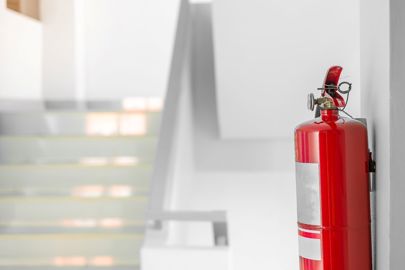
What should I do if there is a fire in my home?
What should I do there’s a fire in my home?
-
Let everyone in your home know that there’s a smoke alarm going off and make your way out using your escape route.
-
Close doors behind you where possible to stop the fire from spreading.
-
Crawl along the floor if there’s smoke – the air will be clearer.
-
Call 999 and ask for the Fire Service.
-
Do not return to the property until it is safe to do so.
If you live in a housing block, follow the fire action notice displayed in your building and any specific evacuation instructions provided.
We are committed to ensuring our homes and buildings are safe and comply with all fire safety legislation. We regularly assess fire risks, maintain fire safety systems, and work with specialist contractors and emergency services to keep our customers safe.
What we do
We have a legal duty under the Fire Safety Regulations to identify and remove any risks and hazards, or to reduce these as far as possible. We take a proactive approach to fire safety by:
-
Carrying out regular fire risk assessments where required.
-
Inspecting and maintaining fire doors, alarms, emergency lighting, and firefighting equipment where required
-
Ensuring communal areas are kept safe and free from fire hazards.
-
Completing fire safety improvement works where required.
-
Providing support to vulnerable customers where additional fire safety measures may be needed.
-
Promoting fire safety awareness and prevention across our communities.
Reporting a fire safety concern
Please report any fire safety concerns as soon as possible, including:
-
Damaged fire doors.
-
Obstructed escape routes.
-
Faulty emergency lighting.
-
Fire alarm faults.
-
Unsafe charging of batteries.
-
Storage of e-bikes or e-scooters in communal areas.
-
Excessive clutter or hoarding that may create a fire risk.
Contact us:
Email: customerexperience@rbh.org.uk
Phone: Freephone 0800 027 7769/01706 274100
You can also contact Greater Manchester Fire and Rescue Service for more information, advice, reassurance and support.
Below are some handy leaflets and downloads that may help you stay safe in your home:
Advice around free Home Fire Safety Assessments (HFSA) leaflet: Free Home Fire Safety Assessment
Smoke and heat alarms leaflet: Smoke and Heat Alarms
You can also carry out you own Online Home Fire Safety Check by clicking here
Together, we can help keep our homes, buildings, and communities safe.
What you can do - everyone has a role to play in keeping our homes and communities safe
-
General tips
-
Test your smoke alarms every week.
-
Keep internal doors closed, especially at night and when you go out.
-
-
In the kitchen
-
Never leave cooking unattended.
-
Double check that your oven, hob, and grill are switched off when you’ve finished cooking.
-
Keep the oven, hob, and grill clean - a build up of fat and grease can easily catch fire.
-
Keep things like matches, lighters, and hot pans out of reach for children.
-
Avoid cooking if you’re tired, have been drinking alcohol, or you’re taking medication that might make you drowsy.
-
-
Electrical appliances and heaters
-
Don’t overload electric sockets.
-
Don’t charge things like e-scooters, mobile phones, tablets, and e-cigs overnight or longer than the recommended charging time (see below).
-
Only ever charge electrics with chargers provided by the manufacturer.
-
Keep clothes well away from heaters and fires.
-
Flammable liquids such as petroleum should not be used or stored in RBH properties.
You can find out more by visiting our Electrical Safety Checks page on the website.
-
-
Fire Doors
Fire doors are designed to slow the spread of fire and smoke and protect escape routes.
-
Never wedge fire doors open.
-
Do not tamper with self-closing devices.
-
Report any damage to fire doors immediately.
-
-
Reduce the risk of fire
The risk of fire is greatly increased in hot, dry conditions. Please don’t be tempted to light a garden fire or BBQ when it’s very hot outside.
-
Portable gas heaters
Portable gas heaters can produce carbon monoxide, increase fire and gas leak risks, and create excess moisture that may lead to damp and mould. If you're struggling to heat your home, please contact us for advice and support.
-
Log burners and solid fuel appliances
Do not install or use log burners without permission. These appliances can create smoke pollution, affect air quality, and increase fire risks if not properly installed and maintained.
Please contact us before considering alternative heating options.
For more information on Gas Safety visit our webpage here -
Carbon monoxide (CO) and smoke alarms
We’re required to install a CO alarm in each room containing a gas appliance (excluding gas cookers) and a smoke alarm on each floor of a property. All RBH properties are fitted with carbon monoxide (CO) and smoke alarms.
How to test your smoke and carbon monoxide alarms
It’s important that you test your smoke and carbon monoxide alarms to make sure that they’re working properly.
The easiest way to test an alarm is to press the button on it so that the alarm goes off. If it makes a noise and sounds like an alarm, then you know it’s working correctly.
Test your alarms weekly to make sure they’re working.
If you don’t think your smoke or carbon monoxide alarms are working properly, please phone us on 0800 027 7769. -
Prepare an escape plan
We hope you'll never experience a fire in your home, but it's good to be prepared in the event of an emergency.
-
Think about how you would get out of the property in the event of a fire. Your escape plan is usually your normal way out of the house, so keep those exits clear.
-
Make sure everyone else in your household knows what the escape plan is.
-
Keep doors and windows clear where everyone can get to them.
-
Keep doors closed as they help to slow down the spread of the fire and give you extra time to get out.
-
-
Residential Personal Emergency Evacuation Plans (RPEEPs)
Do You Need Extra Support in a Fire Emergency?
If you, or someone in your household, would find it difficult to leave your home quickly in an emergency, we can help.
This could be because of:
-
Reduced mobility
-
A disability or health condition
-
A temporary injury
-
Medication that affects movement or causes drowsiness
What is an RPEEP?
A Residential Personal Emergency Evacuation Plan (RPEEP) is a personal plan for customers who may need help to evacuate safely during a fire. It is a simple assessment that helps us understand your individual needs and identify any extra support you may require.The plan may include:
-
What to do if there is a fire
-
How to raise the alarm
-
Information to support Fire and Rescue Services
-
Any equipment or assistance that may be needed
To arrange a confidential assessment, please contact us:
Email: customerexperience@rbh.org.uk
Phone: Freephone 0800 027 7769/01706 274100
The details are held line with GDPR requirements and can be removed from our data when no longer required.
For more fire safety advice visit Greater Manchester Fire and Rescue Service website here
-
-
Fire safety in communal buildings
If you live in a communal building fire safety can not only save the lives of the people living in your home, but all of the homes in your building.
Every communal building has an emergency evacuation plan. Your plan will be displayed on signs near the entrance to your building. Please take note of the plan, including where the meeting point is for emergencies. -
Do you think you may need help getting out of the building in an emergency situation?
Don't block escape routes
-
Remember, when you share a building with other families, your safety and theirs depends on everyone co-operating.
-
Communal corridors are everyone's escape routes in an emergency. Please don't block corridors with your belonging. Even a simple door mat could cause a trip hazard and put lives at risk.
-
In your own home, do not block your hall or put portable heaters or anything that catches fire easily in your hallway. It is the only escape route for you and your family.
-
-
Storing items against external walls
Items that are potentially flammable shouldn't be stored against external walls of communal buildings as they present a risk of fire spreading to other homes within the building.
A fire against an external wall could potentially affect the structure of the building, particularly around doors, windows, or cladding.-
Rubbish bins are one of the items that can cause fires, and they pose more of a risk when stored against an external wall.
-
-
Lithium Batteries, E-Scooters and E-Bikes
Lithium-ion batteries are commonly used in e-bikes, e-scooters, mobility aids, phones, and other rechargeable devices. If damaged, faulty, or incorrectly charged, they can present a significant fire risk.
To reduce the risk:
-
Always use the manufacturer's approved charger.
-
Never charge batteries overnight or while you are asleep.
-
Avoid charging batteries in hallways, escape routes, or communal areas.
-
Do not cover chargers or batteries while charging.
-
Stop using batteries that show signs of damage, overheating, swelling, or unusual smells.
-
Follow the manufacturer's maintenance and storage instructions.
-
Dispose of damaged batteries safely at an approved recycling centre.
Electric scooters and e-bikes – charging batteries and maintenance
Like all electrical items, mobility scooters, e-bikes and e-scooters with a lithium battery can cause a fire risk. If the batteries become damaged or begin to fail, they can start fires that spread quickly out of control.
When charging lithium batteries:
-
Don’t block your exit with charging batteries, mobility scooters, e-bikes, or e-scooters - keep your exit route clear at all times.
-
Never leave your battery to charge when you’re out or asleep.
-
Make sure your battery and charger meet UK safety standards.
-
Use the correct charger for your battery and only buy from a reputable seller.
-
Let your battery cool before charging it.
-
Unplug your charger once the battery has charged.
-
Check the smoke alarms in the area where you charge your batteries.
-
Know the warning signs that your battery might be failing and becoming a fire risk (see below).
Before a failing lithium battery catches fire, there are often a few warning signs. If you see any of these signs, you'll need to take immediate action to stay safe and reduce the risk of fire:
-
Heat - it’s normal for batteries to generate some heat when charging or in use but if the battery feels extremely hot to the touch it might be damaged.
-
Bulging - a battery bulging or swelling out of shape is a common sign of it failing. If your battery looks swollen, has any lumps, or is leaking, you should stop using it immediately.
-
Noise - failing lithium batteries have also been reported to make hissing or cracking sounds.
-
Smell - a strong or unusual smell coming from the battery could also be a sign of it failing.
-
Performance - a failure to fully charge or longer charge times can be a sign that your battery is failing.
-
Smoke - if your battery or device is smoking, a fire has already started.
What you should do if your lithium battery is a fire risk
If your battery shows any of these signs of failing, immediately turn off the device and unplug it from the power source.
Call the device manufacturer or retailer for further instructions. If the device starts smoking or catches fire, raise the alarm, get out, stay out and call 999 immediately.
Disposing of a lithium battery
Lithium batteries shouldn’t be placed in your wheelie bin or communal bin due to the fire risk they pose. Instead, you should dispose of them safely at your local household waste recycling centres.
-
-
Mobile scooters
We have specific guidance for customers with a mobile scooter:
-
Mobility scooters should be recharged within the designated charging area and should be charged according to the manufacturer’s instructions.
-
Recharging should only be carried out during daytime hours and not overnight.
-
If a scooter store is provided it should not be used for charging up of any other personal items, such as laptops or mobile phones.
-
All scooters must have an up-to-date Portable Appliance Test (PAT testing) to make sure that the charging equipment is in good condition.
-
If RBH provides mobile scooter store the PAT testing will be carried out by RBH on an annual basis. Customer must make sure that the equipment is available for testing when notified of the date, if the equipment is not tested on this date, it is the responsibility of the scooter owner to have this done.
-
If any equipment fails the PAT test, it will be the scooter owner’s responsibility to repair/replace the damaged item before it can be used again.
-
Customer must make sure that the scooter is serviced and maintained regularly, and this is the responsibility of the scooter owner.
-
Mobile scooters must be stored designated storerooms or your homes not within communal areas. It is the responsibility of owner to ensure this fits within their home.
-
-
Hoarding
Large accumulations of belongings can significantly increase the risk and impact of a fire.
Hoarding can:
-
Increase the amount of fuel available for a fire.
-
Block escape routes and exits.
-
Restrict access for firefighters.
-
Prevent smoke alarms from working effectively.
-
Increase the risk of injury during an evacuation.
If you are struggling with clutter or hoarding, we are here to help. We can work with residents and support agencies to find practical solutions that improve safety while providing appropriate support and understanding.
If you, or someone you know is struggling with hoarding, support is available - please contact us.
-
Make sure you have home contents insurance
It’s important that you arrange contents insurance to cover your belongings in case of things like theft, water damage, fire, and other household risks.
No matter how careful you are, there’s always a risk that your belongings could be broken, damaged, or stolen.
Home Contents Insurance can help give peace of mind should the worst happen.
To find out more about the Home Contents Insurance Scheme, where you can pay premiums alongside your rent.
Visit our Home Contents Insurance page to find out more or email: customer@rbh.org.uk or call us on Freephone 0800 027 7769 or 01706 274100.
Fire Safety Information Sheet
You can find a compressed, easy to use version of the information above in this useful document
-
Fire Safety Information Sheet