What is asbestos?
Asbestos is a material that was widely used in building products between the 1950s and 1990s. It was commonly used because it is strong, durable and resistant to heat and fire.
Many homes built before 2000 may contain asbestos-containing materials (ACMs). Asbestos is only a risk to health if it is damaged or disturbed, releasing fibres into the air that can be breathed in.
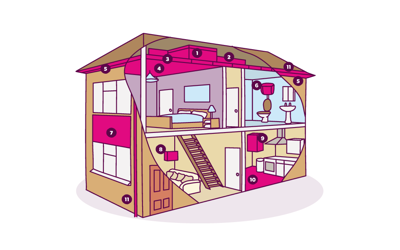
Asbestos may be present in: This list isn’t exhaustive and there may be other areas where it could be located:
-
Soffits, eaves, rainwater systems
-
Window panels
-
Roof sheets and felt
-
Garage and shed roofs
-
Linings for ceilings, walls and doors, and header panels above doors
-
Ceiling tiles
-
Insulation panels in some storage heaters
-
Fire breaks in loft areas
-
Bath panels and pipe boxing
-
Boiler or fireplace flues
-
Textured coating/Artex, cement water tanks and toilets cisterns
-
Floor tiles and the bitumen adhesive underneath
Although rarer, asbestos can still be found in some older appliances and equipment in the home including ironing boards, heaters and fire blankets.
Not all older properties contain asbestos, and its presence does not automatically mean there is a danger.
Contact us if you require further information or have any concerns at all
For advice, or to discuss planned works, please contact the RBH Repairs and Customer Experience Team.
If you believe asbestos-containing material has been damaged, or if building work has accidentally disturbed it, please contact us as soon as possible.
Do not attempt to clean up or remove any debris yourself.
Contact us on:
Email: rbh.repairs@rbh.org.uk
Phone: 0800 027 7769
For further information on asbestos you can also visit the Health and Safety Executive website (phone: 0845 345 0055).
-
Is asbestos dangerous?
Asbestos-containing materials that are in good condition and left undisturbed generally do not pose a risk.
The risk arises when asbestos is damaged, drilled, sanded, cut, broken or otherwise disturbed, which can release fibres into the air.
.
-
What should I do if I think there is asbestos in my home?
If you think a material in your home may contain asbestos:
✅ Leave it alone and avoid disturbing it.
✅ Do not drill, sand, scrape, saw or remove it yourself.
✅ Contact RBH for advice before carrying out any DIY work.
Our trained teams will assess the situation and arrange surveys or specialist support where required.
Before carrying out any DIY work, including:
-
Drilling walls
-
Installing shelves
-
Replacing flooring
-
Removing cupboards
-
Altering ceilings
Please contact RBH first. We can check whether asbestos information is available for your property and advise on the safest way to proceed.
-
-
What is the likelihood of exposure to asbestos in the home ?
There are very low levels of Asbestos in the atmosphere all the time, exposure to this low level of Asbestos fibres is unlikely to harm peoples’ health.
It is very unlikely that the levels of Asbestos that may be found in your home will be harmful, but if you believe you have Asbestos in your home, you should contact us on rbh.repairs@rbh.org.uk so we can survey and monitor the Asbestos to reduce the risk even further.
-
Are you at risk?
Asbestos can only pose a risk to your health if the Asbestos fibres become airborne.
You will not be at risk if products containing Asbestos are undisturbed or undamaged.
In good condition Asbestos is not a health hazard and if it is undamaged it should be left alone and monitored.
DIY activities such as drilling, sanding and sawing may disturb and possibly damage products containing Asbestos.
Before doing any DIY please contact us on rbh.repairs@rbh.org.uk and we'll be able to advise on the risk of Asbestos in your home.
-
What is RBH doing to manage asbestos?
What is RBH doing to manage asbestos?
RBH has a legal duty to manage asbestos in its properties. We:
-
Carry out asbestos surveys where required
-
Keep records of known asbestos-containing materials
-
Regularly review asbestos information
-
Ensure any necessary removal work is completed by qualified contractors
-
Follow all relevant health and safety legislation
-